

Trading Fours, Not Vibe Coding
There is a better name for what happens when a person and a machine build something real together. Guitar players have had it for almost a hundred years, and it is not vibe coding.
There is a phrase going around for what happens when a person and an artificial intelligence make something together. The phrase is "vibe coding." It is catchy, it is everywhere, and if you play an instrument, it should bug you a little, because it describes the wrong thing.
I want to make a case for a better term. It comes from music, it is almost a hundred years old, and you may already know it from the bandstand long before anyone ever pointed it at a computer. The term is trading fours.
Let me earn that claim properly. First the history, because the history is the argument.
"One voice speaks. Another voice answers. The thing that gets built lives in the space between them."
What trading fours actually is
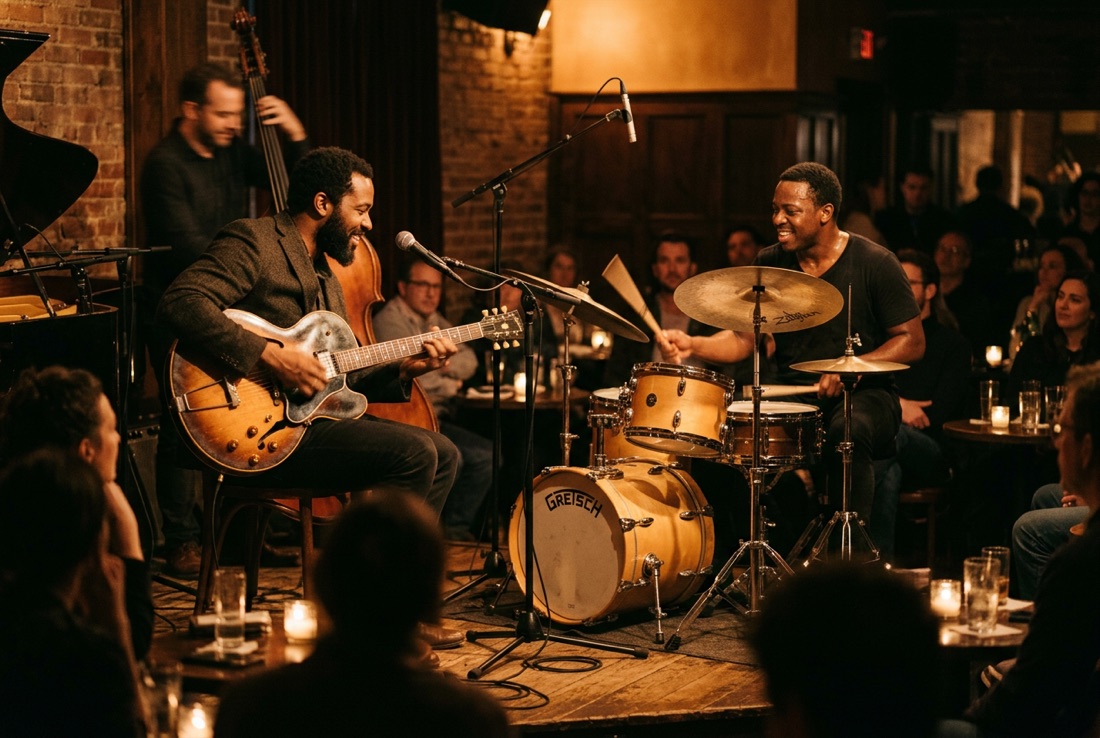
Picture a small jazz group. A horn player takes a solo. Then, instead of one person soloing for chorus after chorus, the players start handing the spotlight back and forth in short bursts. The saxophone improvises for four bars. Then the drummer answers for four bars, picking up the shape and the energy of what the sax just played and throwing something back. Then the sax again, responding to the drummer. Four bars each, back and forth, around the group.
That is trading fours. Sometimes it is trading eights, sometimes trading twos when things get hot and the phrases get short. The number is just how many bars you get before you hand it off. The heart of it is the same every time: call and response. You listen hard to what your partner just played, and then you answer it. Not with a script. In the moment.
This is not a modern invention and it is not a gimmick. Trading fours grew up in the bebop clubs of the 1940s, and the deeper habit underneath it, call and response, is older than recorded music. It runs through the field hollers and work songs that fed the blues, through gospel where the preacher calls and the congregation answers, all the way back. When a jazz quartet trades fours, they are doing something humans have done around fires and in churches and on porches forever. One voice speaks. Another voice answers. The thing that gets built lives in the space between them, and neither one could have made it alone.
Here is the part that matters for our purposes. Trading fours only works if both players are fully present. You cannot phone in your four bars. You have to listen to the bar that came before, or your answer makes no sense. The drummer who is not really listening just plays a fill. The drummer who is listening plays a reply. Everybody in the room can hear the difference.
Hold onto that. We are going to need it.
Where "vibe coding" came from
Now the other phrase, told straight.
"Vibe coding" was coined in early 2025 by a well known artificial intelligence researcher named Andrej Karpathy. He is not a lightweight. He helped start one of the major AI labs and led AI work at a large car company, so when he names a thing, the internet listens. In a short post he described a new way of building software with these tools, and the way he described it is the whole point.
He said you "fully give in to the vibes" and "forget that the code even exists." He talked about accepting whatever the machine suggests without reading it closely, not studying the details, just going with the flow and seeing what comes out. He meant it lightly, a little tongue in cheek, about a loose and low effort way of poking at something for fun.
And the phrase took off like a struck match. By the end of 2025 you could not move without hearing it. People used it for everything anyone did with an AI, serious or not.
Read his description again, though. The thing he actually named is low attention. Hands off the wheel. Do not look too closely. Let it ride. That is a real thing, and sometimes it is even a fine thing for a quick toy on a lazy afternoon. But somewhere along the way the culture took a phrase that means "stop paying attention" and pasted it onto all of it, including the work that is the exact opposite.
"Vibe coding is not a myth. It is the mistake."
That is the cleanest way to say it. The term is not describing a fiction, and it is not describing a style. It is describing the error. It is the name for the moment you lean back when you should have leaned in, the moment you let the wheel go. Karpathy named a real thing. He just named the wrong half of the work, and the culture ran with the wrong half like it was the whole job.
Why "vibe" is the wrong word for the good version
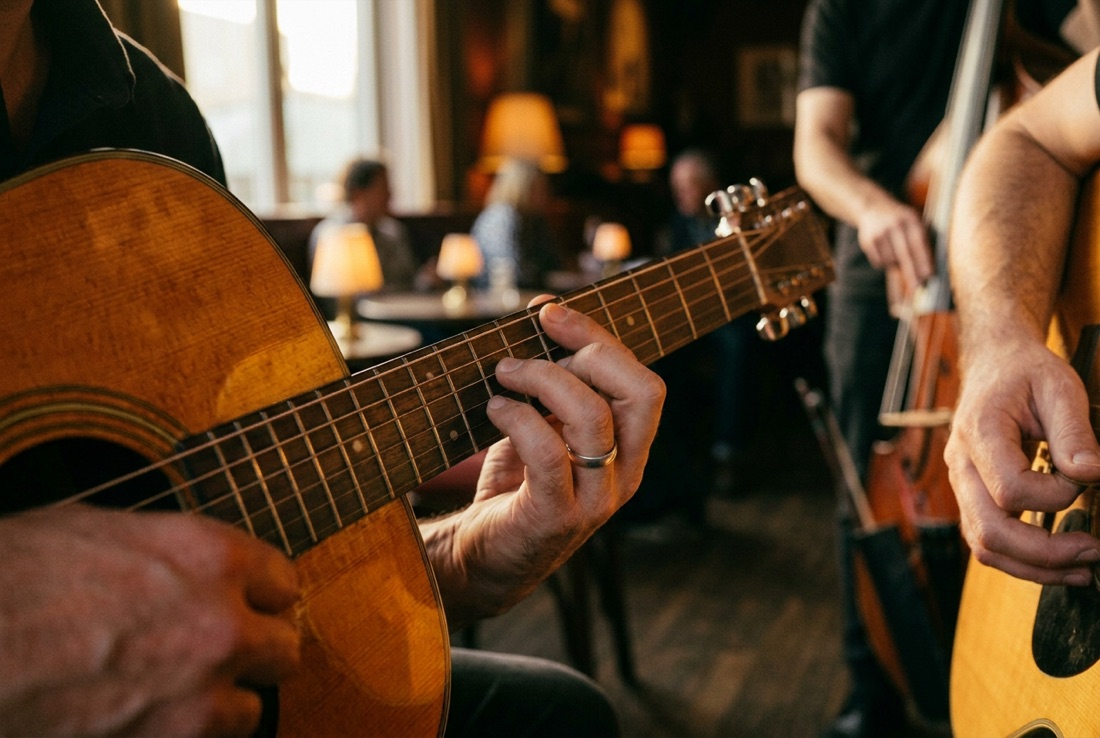
Think about what a vibe is. A vibe is a feeling in a room. It is passive. It washes over you. You do not do a vibe. You catch one. You sink into it.
That is a fine word for the loose version Karpathy was joking about. It is a terrible word for the real work, and here is the tell.
When the thing being made is any good, nobody was vibing. Somebody was paying fierce attention. Somebody heard the machine play its four bars and said no, not like that, sadder, make the gray mean something, try it again. Somebody held a standard the machine has no way to hold on its own, because the machine does not know who the song is for or why it has to be kind. A vibe cannot do that. A vibe has no taste and no stakes. Taste and stakes are the human, leaning in, answering back.
"Leaning back gets you mush. Leaning in gets you music."
So calling the good version "vibe coding" gets it exactly backwards. It credits a mood for work that took a hand on it the whole way. It tells the beginner the wrong lesson, that you can lean back and let the magic happen, when the truth is that leaning back gets you mush, and leaning in gets you music. Anybody can vibe their way to a forgettable weekend toy. Nobody vibes their way to a body of real work. That takes showing up, day after day, ears open.
You know this already. It is the same lie as "I'll learn guitar by osmosis if I leave it on the couch." The guitar does not care about your vibe. It cares whether you picked it up.
Why trading fours fits
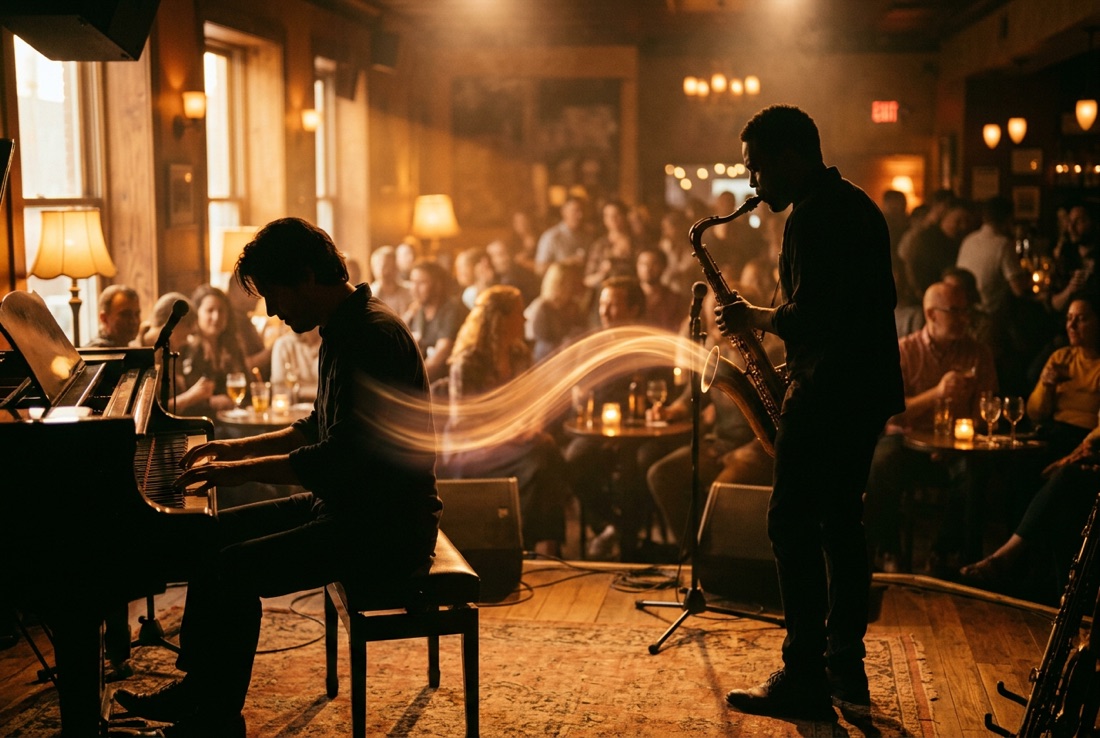
Now put the two side by side.
A person sits down with one of these tools to build something real. The person says what they want. The machine answers, fast, with a draft, a shape, a first take. The person listens to that take, keeps the good, throws back a correction, raises the idea. The machine answers again. Back and forth, in short bursts, each turn built on the last, until a thing exists that neither one would have made alone.
That is not a vibe. That is trading fours. Same move the jazz quartet has been making since the 1940s. Call and response. Listen, answer, listen, answer. The machine is fast and tireless and can play a hundred takes without getting bored. The person brings the thing the machine cannot, the ear, the taste, the reason it matters, the standard. Two players, both fully present, building in the space between.
And the best part of the analogy is the part beginners feel first. In trading fours, there are no spectators in the band. You do not get to sit out your four bars. The whole thing falls apart the second one player stops listening. That is the honest picture of working with AI well. You are not a passenger watching the robot drive. You are a player, on the stand, holding your bars, or the music turns to mush.
"There are no spectators in the band."
The honest part
Now I owe you something, because this channel does not hand you a line and pretend it is gospel.
Trading fours, the jazz term, is real and old and not mine. I did not invent it and I am not dressing it up. Vibe coding, the origin I gave you, is real too, coined in early 2025, exactly as described.
But hooking the two together, holding trading fours up as the better name for working with AI, that part is an argument, not a fact. It is a reframe I am proposing, not a movement you can go look up. There is no official "trading fours" school of building software. If it ever catches on, good. If it stays a private thing between a few people who play, also good. I would rather tell you that plainly than let a phrase that sounds clever pass itself off as established. The reframe stands on whether it is true, not on whether it is famous.
I think it is true. I think you will too, because you already live it every time you play with another human and the song gets bigger than either of you planned.
What this has to do with learning guitar
Everything, actually.
When you trade fours with another player, you are practicing the most important skill music has, which is listening and answering. You are learning that you do not have to play the whole song by yourself, and you do not have to disappear and let someone else carry it either. You hold your bars. You stay present. You respond to what is actually happening instead of the plan in your head.
That is the same skill that makes a beginner into a musician, and it turns out it is the same skill that makes any new tool actually serve you instead of replace you. Stay in the band. Keep your ears open. Answer the bar that was just played, not the one you wish had been played. Show up for your turn.
"You do not vibe your way into anything worth keeping. You trade fours."
So the next time someone tells you they vibe coded a thing, you can smile, because now you know the better word. You do not vibe your way into anything worth keeping. You trade fours. You listen, you answer, and you build something in the space between, the way players have done since long before any of us got here.
Pick up the guitar. Hold your four bars. The other player is waiting.
Keep playing
Tap-to-hear chord audio on the chord charts. $9.97/mo after trial.
144 Chord ChartsEvery chord in every family, with finger diagrams and a YouTube lesson on each one.
Chord WheelInteractive wheel that suggests the chords that actually sound good together in any key.
Online Tuner betaBrowser-based guitar tuner, no app, no install, plug in and play.
Gear We Actually RecommendHand-picked beginner guitars, stands, picks, and cables. Affiliate-supported, zero fluff.